16 quick questions. About 2 minutes. You'll get a personalized number most people never find out — plus what to do about it.
Based on epigenetic clock research (Horvath 2013 · PhenoAge · GrimAge) and lifestyle biomarker studies published in Nature Medicine, Frontiers in Nutrition, and NIH PubMed.
Progress0 / 16
Aging Speed Score
0 / 56
Reversal Readiness
0 / 8
Computing Your Biological Age Gap…
Let's start with your age
We compare it against your biological age — the gap is where it gets interesting.
years old
Age 18–99. Your number stays private.
Q01 / 16Cellular Energy
Mitochondrial dysfunction is the #1 driver of epigenetic age acceleration, per research in Nature Metabolism (2023).
How would you describe your baseline energy levels throughout the day — not after caffeine, but your natural cellular energy?
Q02 / 16Inflammation Load
Chronic low-grade inflammation (inflammaging) adds 2–8 years to biological age on PhenoAge epigenetic clock measurements.
How often do you experience signs of systemic inflammation — joint aches, puffiness, skin flare-ups, or general body discomfort?
Q03 / 16Sleep & Repair
Each additional night of poor sleep adds measurable epigenetic age acceleration within 24 hours, per NIH sleep biology research.
How restorative is your sleep? Do you wake feeling genuinely repaired — or like your cells worked overtime?
Q04 / 16Stress Response
Chronic psychological stress accelerates biological age via cortisol-driven DNA methylation changes — up to 6 years per GrimAge clock data.
When you're under sustained stress, how does your body physically respond over time?
Q05 / 16Gut & Microbiome
Gut microbiome diversity directly correlates with biological age on multiple epigenetic clocks. Low diversity = faster aging.
How would you honestly rate your digestive health and gut function on a daily basis?
Q06 / 16Metabolic Health
Blood glucose regulation is a core input of the PhenoAge clock — poor metabolic health is one of the strongest predictors of accelerated biological aging.
How stable is your blood sugar and metabolic regulation — energy crashes, sugar cravings, weight fluctuation?
Q07 / 16Toxic Exposure
Environmental toxins — plastics, pesticides, air pollution — cause DNA methylation changes that accelerate epigenetic aging, per Frontiers in Nutrition research.
How would you rate your daily exposure to environmental toxins — processed food, plastic, chemicals, polluted air?
Q08 / 16Circadian Alignment
Circadian misalignment (irregular sleep/light cycles) is a direct epigenetic aging accelerator — night shift workers age biologically 5+ years faster.
How aligned are you with natural light rhythms — consistent sleep times, morning light, avoiding screens at night?
Q09 / 16Movement & Exercise
Physical activity alters DNA methylation in genes controlling metabolism and inflammation — high activity is associated with biologically younger profiles across multiple aging clocks.
How consistent and physically demanding is your movement practice — not just steps, but genuine cellular stimulation?
Q10 / 16Nutrition Quality
A diet rich in methyl donors (greens, eggs, fish) and polyphenols can slow epigenetic age acceleration. Stanford research: nutrition is the #1 epigenetic lifestyle lever.
How nutrient-dense and anti-inflammatory is your diet — real food, phytonutrients, minimal processed inputs?
Q11 / 16Cognitive Vitality
Epigenetic age acceleration in brain tissue is closely linked to cognitive decline markers — brain fog is an early biological aging signal.
How would you rate your mental sharpness, memory, and cognitive clarity on a typical day?
Q12 / 16Visible Aging Signals
Skin epigenetic clocks (developed from DNA methylation data) can predict biological age from visible aging markers — they correlate with internal cellular age.
Honestly — do you look and feel younger, older, or about the same as your chronological age?
Q13 / 16Recovery Speed
Recovery speed from physical, emotional, or illness challenges is a clinical proxy for biological age — slower recovery correlates with accelerated epigenetic aging.
After a physically demanding event, illness, or emotional crisis — how quickly does your body return to baseline?
Q14 / 16Hormonal Balance
Hormonal dysregulation — particularly cortisol, thyroid, and sex hormones — is both a cause and consequence of accelerated epigenetic aging.
How balanced do your hormones feel — stable mood, normal libido, regulated cycle or testosterone, thyroid function?
Q15 / 16Reversal Desire
Mindset and intention are measurable epigenetic inputs. Research shows that people with high internal locus of control have slower biological aging rates.
When you imagine your body being biologically younger in 12 months — how real and achievable does that feel to you?
Q16 / 16Commitment Readiness
Consistency of intervention is the primary predictor of epigenetic age reversal outcomes across all published longevity trials.
How ready are you RIGHT NOW to make consistent, structured changes to reverse your biological age — not "someday," but this month?
✓ Your results are ready
Want your exclusive member offer?
Your results are ready to view below. Drop your email to unlock an exclusive offer — a members-only discount on the program that reverses the exact aging pattern your score revealed.
Unlock a members-only discount you won't find on the site. Your email, one exclusive offer — no spam, ever.
🔒 Private & secure. Unsubscribe anytime.
Your Biological Age Profile
0
years gap
Aging Speed Score
0/56
Reversal Readiness
0/8
The Founder's Own Result
She did it first. Measurably.
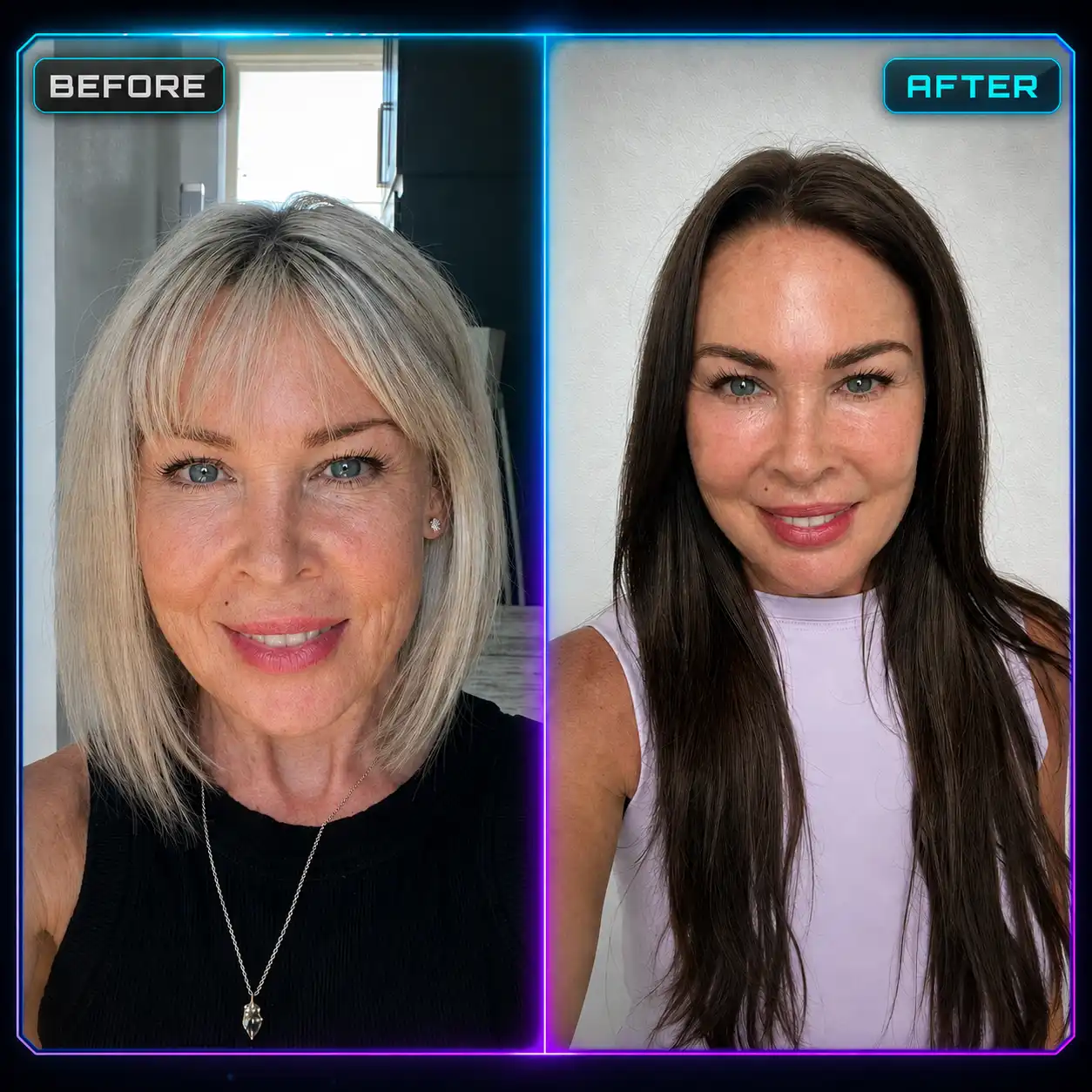
In only three short months, Kim reversed her biological age by four years — a measurable, epigenetically verified result.
Then, applying what her body already knew and adding a higher technology to the science, her age reversed further and her body healed of a 25-year chronic illness.
(After 20+ years of integrative medicine, functional medicine, stress therapy, hypnotherapy, and supplements.)
Most people don’t stay here. Once you can see what is actually driving your gap, the full six-month program stops reading like a cost and starts reading like the obvious next step. Here is what that one costs — honestly.
Where This Leads
You already spend this every month. On things that change nothing.
$120
Coffee out$4 a day
$180
Takeoutonce a week
$60
Streamingbarely watched
None of it touches your biology. You never questioned any of it.
$1,499once
Six months. Your biological age, reversed.
Covers you and your spouse · about $250 a month — then it stops for good
You are not being asked to spend more. You are being asked to move it somewhere that matters.